Speed Wallet - Buy Bitcoin
- 4.7
- Rating
- 500.00K
- Installs
- Free
- Price

 Analysis by App-foxy
I usually think of a crypto wallet as a personal tool, but Speed Wallet becomes more interesting when I look at how it might fit into a household. One person may handle purchases, another may watch the market, and someone else may simply need to receive a digital payment. That shared context makes boundaries and communication just as important as the wallet screen itself.
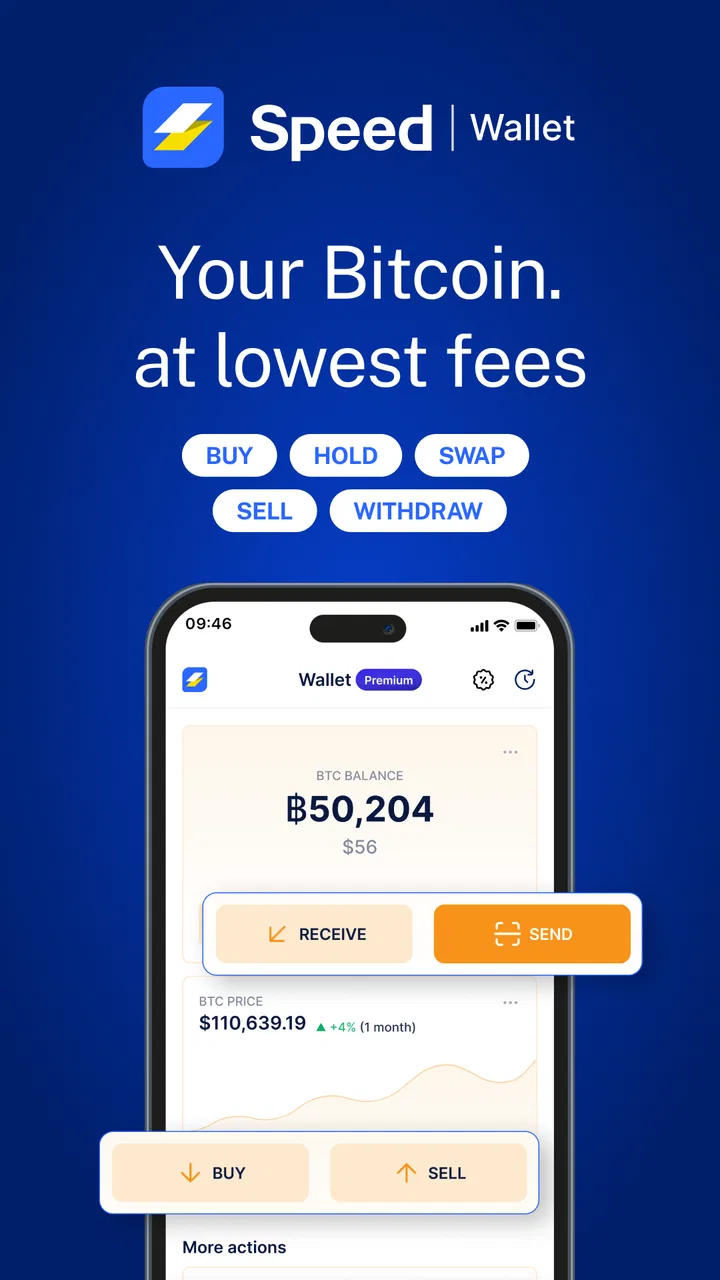
Speed Wallet is a finance app from Speed1 Inc focused on buying, sending, and receiving selected digital assets. It supports Bitcoin, USDT, USDC, and XAUT, so it is aimed at people who want more than a single-coin wallet. I found the appeal easy to understand: the app puts several common crypto actions in one place instead of making me move between a trading service, a separate wallet, and a different receiving tool.
It is free to install and is rated for Everyone, although that age label should not be confused with financial suitability. Crypto transactions involve real value, and a household should decide who is allowed to use the account before anyone starts tapping through the purchase or send screens. The app has a 4.7 average from around fourteen thousand ratings, with more than five hundred thousand installs, which suggests that it has found a substantial audience without making it automatically right for every user.
You May Also Like

 Blood Strike: 2.5 Anniversary
Blood Strike’s Loadouts Turn Every Drop Into a Tactical Gamble
A close look at Blood Strike’s custom loadouts: how fast access to signature weapons reshapes its battle royale rhythm, rewards preparation, and narrows the gap between fights.

 Pandora - Music & Podcasts
Pandora’s Music Is Easy to Start, but Harder to Recover
Pandora’s strength is its low-effort path from a seed to a station. Its weak spot is how much confidence it asks you to place in connection, setup, and quiet recovery.

 8 Ball Pool
 Is Built on Rivalries, Rematches, and Routine
A close look at the rivalries, rematches, shared routines, and unanswered safety questions that turn a quick pool match into a persistent mobile community.

 Samsung Music
’s Quiet Strength Is Playing What You Already Own
Its reach comes less from spectacle than from dependable access to a personal library. That simplicity is both the app’s strongest retention engine and its ceiling.

 AccuWeather: Weather Radar
AccuWeather Review: A Quick, Clear Forecast for Everyday Decisions
For everyday plans, the best forecast is the one you can understand quickly. AccuWeather makes rain timing, radar, and local conditions easy to act on, with a few trade-offs.

 Hill Climb Racing
Why Hill Climb Racing Still Turns Crashes Into One More Run
A tiny car, a bumpy hill and one more upgrade: Hill Climb Racing keeps resurfacing because its simple chaos makes every near-miss feel personal.
More From Our News Desk



How Speed Wallet works in a shared household
In a shared household, I’d treat Speed Wallet as one person’s financial account, not a communal purse. Agreeing in advance on who owns the funds and who may help check a payment makes everyday use less confusing; from there, the next useful step is setting a simple routine for confirming each transaction.
One wallet, several different responsibilities
A realistic household example would be a couple managing a small digital-asset budget. One person might buy Bitcoin occasionally, while the other checks whether a payment arrived in USDC. A teenager could ask for help receiving funds, but that does not mean the teenager should have unrestricted access to the account or its recovery details. I would treat Speed Wallet as a personal financial account first and a shared household tool only when everyone understands exactly whose funds are involved.
The most useful starting point is to separate ownership from assistance. If I own the assets, I should be the person who approves transactions and protects account access. Another household member can help read an address, compare the selected asset, or confirm the amount, but I would avoid passing around passwords, recovery information, or an unlocked phone. This is not a special criticism of Speed Wallet; it is a practical rule for any wallet that can move money instantly.
That distinction matters because crypto transfers are not like sending a message that can simply be edited later. A rushed tap can send the wrong asset or use an unsuitable destination. Before using the app with someone else nearby, I would agree on a simple routine: say the asset aloud, check the destination, confirm the amount, and only then approve the transaction. This small pause is more valuable than trying to make the app serve as a family account.
Setting boundaries before the first purchase
Setup is the moment when I would establish the household rules. The person whose money is being used should create and control the account, while other people should know whether they are observers, helpers, or authorized users. I would not assume that an Everyone rating means a child can safely manage the wallet. It describes the app’s content suitability, not the maturity needed to handle irreversible financial decisions.
I would also keep the app on a device that has a clear owner. A shared tablet or family phone can be convenient, but it increases the chance that someone opens the wallet at the wrong time or sees information meant to remain private. If a shared device is unavoidable, I would sign out when appropriate, use the device’s own lock features, and avoid leaving transaction screens visible. These are household habits rather than advertised wallet functions, but they make a major difference.
Speed Wallet runs on Android versions from 8.0 onward, which makes it accessible on many older phones. That is useful if a household has a spare device, but I would not use an old phone merely because the app can run on it. A device that no longer receives dependable security updates is a poor place for a wallet, even if the application itself installs successfully. In my view, device security should take priority over convenience.
The current version is 2.5.8.0.0.1.fp.gps. I would keep it updated through the normal app store process and read each confirmation screen carefully after an update, rather than assuming every menu behaves exactly as before. The long version label is not a problem by itself, but it is a reminder to check that I am using the official application and not a similarly named imitation.
Coordinating payments without losing track
The app’s support for Bitcoin, USDT, USDC, and XAUT creates useful flexibility, but it also creates a coordination challenge. If someone says, “Send the crypto,” that instruction is incomplete. I would ask which asset, which network or destination details the recipient expects, and whether the amount is being discussed in the asset itself or in a familiar currency equivalent. The more people involved, the more important that shared vocabulary becomes.
For a household payment, I would use a written note or message to record the purpose, asset, amount, recipient, and date. I would never rely on memory after looking at several balances. This is especially helpful when one person prepares the transfer and another person gives the final approval. The second person should verify the information independently instead of merely asking, “Does that look right?”
Receiving money deserves the same care. Before giving someone an address, I would confirm that it belongs to the intended asset and that the sender understands what they are sending. A Bitcoin address should not be treated as interchangeable with a stablecoin destination simply because both appear inside the same wallet. The app’s multi-asset design is convenient, but it makes careless copying more dangerous, not less.
One practical workflow I liked is using the wallet for a clearly defined purpose rather than mixing every household transaction together. For example, I might keep a small amount intended for online payments separate from money held for longer-term exposure. Even if the app presents everything in one interface, my own notes can preserve that distinction. It makes later checking easier and reduces arguments about who spent what.
Buying, sending, and receiving in everyday use
For a first-time user, buying crypto can feel more complicated than receiving it. I would begin with a modest amount and treat the first purchase as a learning transaction. The goal is to understand the confirmation flow, the displayed asset, and the way the app presents the result before involving a larger household budget. Speed is useful only when I remain attentive; a quick interface should not encourage automatic approval.
Sending is where I would be most cautious. I would copy the destination rather than type it, compare the beginning and end of the address, and ask the recipient to confirm the expected asset. I would also check whether the final amount includes any applicable transaction cost shown during confirmation. The exact cost can depend on the transaction and network conditions, so I would rely on the amount displayed in the app at that moment instead of budgeting from an old example.
Receiving is generally easier for coordination because I can prepare the destination before the sender acts. I would send the address through a channel I trust, avoid screenshots that expose more wallet information than necessary, and wait for the transaction to appear before considering the payment complete. A household member who is unfamiliar with crypto should understand that seeing a pending or incomplete state is not the same as having spendable funds.
The supported assets also suggest different use cases. Bitcoin may appeal to someone seeking exposure to the best-known cryptocurrency. USDT and USDC can be more practical when the sender and recipient want a token designed to track a traditional currency, while XAUT may interest someone looking for a token connected to gold. Those descriptions do not remove market, issuer, custody, or network risks. I would choose the asset because it suits the payment or holding purpose, not simply because it appears in the same menu.
Trust, age, and who should skip it
Although the app is marked Everyone, I would not hand it to a young child as a casual learning toy. A child can learn what a wallet is using a demonstration or supervised explanation without controlling real funds. If a teenager needs to receive crypto for a legitimate reason, I would keep the adult account holder involved in every step and make sure the teenager understands that addresses, amounts, and approvals must be checked carefully.
Trust is also important between adults. A shared household does not automatically mean shared financial authority. I would avoid using one person’s wallet as a communal pool unless the ownership and approval process are genuinely clear. If two adults need independent control, separate accounts may be easier to understand than trying to force one wallet to represent two people’s finances.
I would skip Speed Wallet if I wanted a full investment platform with extensive research, advanced trading tools, or a broad portfolio of financial products. Its strength is the direct wallet workflow around buying, sending, and receiving selected crypto assets. Someone who wants detailed tax reporting, complex order types, or institutional-style controls may be better served by a dedicated exchange or brokerage, depending on local availability and requirements.
I would also skip it for a person who is uncomfortable checking addresses and transaction details. No wallet can make irreversible transfers risk-free through a friendly interface. If I am likely to approve a payment while distracted, or if another household member will regularly use the phone without supervision, a crypto wallet may create more stress than convenience.
Costs, expectations, and the practical trade-off
Speed Wallet is free to install, but in-app purchases are listed from around five dollars to around fifty dollars per item. I would not interpret the free download as meaning that every financial action is costless. Crypto purchases and transfers can involve their own pricing, spreads, or network-related costs, so I would inspect the complete confirmation screen before approving anything. The important habit is to judge the final amount received, not just the headline amount entered.
This is where the app differs from a traditional bank app. A bank transfer usually comes with familiar recipient details, established dispute processes, and a clearer separation between account balances and payment instructions. Speed Wallet offers a more direct route into digital assets, but that directness shifts more responsibility onto me. I have to recognize the asset, verify the destination, protect access, and keep my own records.
Compared with a dedicated exchange, the wallet may feel less overwhelming for a person who mainly wants a focused crypto tool. Compared with a hardware wallet, it is likely to be more convenient for everyday phone-based access, while a dedicated offline device may be preferable for someone prioritizing long-term custody and minimizing exposure from a connected phone. I would choose based on the job: routine access favors convenience, while substantial long-term holdings deserve a more deliberate security plan.
Another trade-off is household visibility. A shared exchange account or joint budgeting system may make group oversight easier, but that convenience can blur personal ownership. A personal wallet can preserve clearer responsibility, yet it requires better communication when multiple people are involved. Speed Wallet works best when the household agrees that coordination means checking and discussing transactions, not casually sharing unrestricted access.
My household verdict after using it
My overall impression is that Speed Wallet is a straightforward option for someone who wants a phone-based way to buy, send, and receive a small selection of widely recognized digital assets. The combination of Bitcoin, USDT, USDC, and XAUT gives it more range than a single-purpose Bitcoin wallet, while the focused design keeps the basic use case understandable. I especially see value for an adult who wants one place for occasional purchases and incoming payments.
For household use, I would recommend it with firm boundaries. Keep one accountable owner, avoid passing around unlocked access, confirm the asset before every transfer, and write down the purpose of shared transactions. Those steps address the biggest practical risks without pretending that the app is a family banking system. The Everyone rating makes the app broadly approachable, but financial responsibility still belongs with an informed adult.
There are also clear reasons to choose something else. A person who needs advanced trading, detailed reporting, joint ownership, or a stronger offline-custody setup should compare dedicated alternatives before committing. Speed Wallet is not a substitute for learning how crypto transfers work, and its convenience should not be mistaken for protection against mistakes.
For me, the deciding question is simple: do I want a focused wallet for selected assets and am I willing to personally verify every important action? If the answer is yes, the free app from Speed1 Inc is worth considering. If the answer is no, especially on a shared device or in a household where responsibilities are unclear, I would wait until the account boundaries and approval routine are settled. Used that way, it can be a practical tool rather than an impulsive shortcut into cryptocurrency.
FAQs for Speed Wallet - Buy Bitcoin
01What is Speed Wallet – Buy Bitcoin, and who is it designed for?
Speed Wallet – Buy Bitcoin is a cryptocurrency wallet and purchasing app focused on helping users buy, store, and manage Bitcoin from a mobile device. It is mainly intended for beginners and everyday users who want a simpler way to access Bitcoin without relying on complicated desktop tools. Before downloading, consider whether its supported countries, payment methods, verification requirements, and available features match your needs.
02Can I buy Bitcoin directly through Speed Wallet?
The app is designed to provide a direct Bitcoin-buying experience, although the exact process may depend on your location, payment provider, account status, and local regulations. Users may need to complete identity verification before making a purchase, and available payment options can vary. Always review the quoted exchange rate, service charges, network fees, and final transaction amount before confirming an order.
03How does Speed Wallet protect my Bitcoin and personal information?
As with any cryptocurrency wallet, security depends on both the app’s protections and the way you manage your account. Speed Wallet may use measures such as account authentication, encrypted communication, and wallet security controls, but users should still enable every available security option, use a unique password, and avoid sharing recovery details. Never send your seed phrase, private keys, or verification codes to anyone.
04Are there fees or limits when using Speed Wallet – Buy Bitcoin?
Buying Bitcoin through a mobile wallet can involve several costs, including the app or provider’s service fee, payment-processing charges, blockchain network fees, and the difference between the market price and the quoted purchase price. There may also be minimum or maximum transaction limits, depending on verification level and region. Check the complete order summary before approving a transaction, since fees and limits can change.
05Is Speed Wallet – Buy Bitcoin available everywhere, and is it safe for large holdings?
Availability and functionality may differ by country because cryptocurrency services must follow local financial regulations. Some users may have access to buying features while others may only be able to use wallet functions. Although the app can be convenient for everyday transactions, it is wise to research its custody model, backup options, withdrawal process, and support quality before storing substantial funds. Consider using additional secure storage for long-term holdings.
Pros
- Simple interface makes buying Bitcoin approachable for beginners.
- Supports quick purchases directly from a mobile device.
- Provides a convenient way to monitor cryptocurrency holdings.
- Useful for users seeking a dedicated Bitcoin wallet experience.
- Mobile access allows portfolio checks while traveling or on the go.
Cons
- Availability of features may vary by country and local regulations.
- Cryptocurrency prices can change rapidly after a purchase.
- Transaction and service fees may reduce the value of small purchases.
- Account verification can be required before using key features.
- Users remain exposed to the risks of Bitcoin market volatility.

Speed Wallet - Buy Bitcoin
Gallery